Exploring Interactive Learning for the Era of Climate Change
Abstract
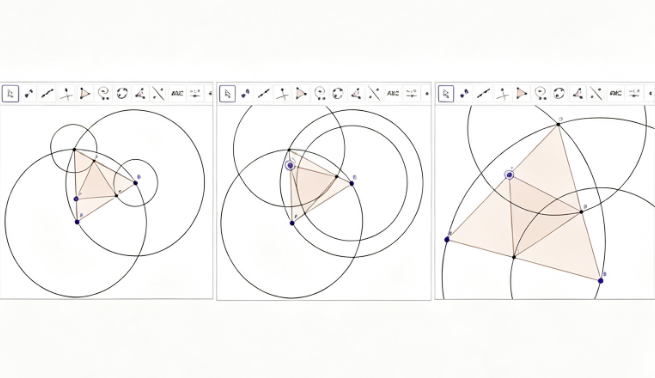
The world changed significantly about 70 years ago. The atomic bomb, population explosion, exponential growth of fossil-fuel usage with CO2 emissions, urban/suburban sprawl and numerous other socio-economic transformations led to a dangerously increased influence of human behavior on worldwide natural systems. Public understanding now has to catch up with these changes so we can comprehend and moderate the new and potentially catastrophic processes. Learning researchers should urgently develop transformed approaches to understanding and teaching about this new world of climate change, in which natural and societal processes are inexorably entangled. This will require new conceptualizations of knowledge and new methods of education. This essay reports on a research project that may indicate a direction for designing education in and about the era of climate change. By reviewing the project’s empirical results, it suggests a direction for the future of interactive and intelligent learning. Specifically, it sketches focal points of a philosophy of computer-supported collaborative learning (CSCL) that emerged from research on teaching and learning dynamic geometry. As an illustrative case study of educating for the new age, it suggests that dynamic geometry as taught in the project can provide student collaborative knowledge building with a model of “dependencies ” in interconnected systems, preparing groups of students to understand the interactions among human and natural systems in the present era. Review of this research project exploring the development of mathematical cognition by student groups learning dynamic geometry in online teams elaborates a theory of learning and thinking as “group cognition” – thinking by means of social and semantic interaction within group discourse, mediated by physical and digital artifacts, rather than within individual minds. The recommended approach to learning centered on technologically supported group interaction aligns education with the multidisciplinary nature of science in the present, and suggests promising approaches to interactive and intelligent learning in this challenging epoch.References
Boylan, M., & Coles, A. (2017). Is another mathematics education possible? An introduction to a special issue on mathematics education and the living world: Responses to ecological crisis. Philosophy of Mathematics Education Journal. 32, 1-17.
Clark, H., & Brennan, S. (1991). Grounding in communication. In L. Resnick, J. Levine & S. Teasley (Eds.), Perspectives on socially-shared cognition. (pp. 127-149). Washington, DC: APA. DOI: https://doi.org/10.1037/10096-006
Cole, D. R. (2024). What happens next? Working the time dimension of educational research. In Educational research and the question(s) of time. (pp. 19-38). Singapore: Springer Nature Singapore. DOI: https://doi.org/10.1007/978-981-97-3418-4_2
Coles, A. (2017). Habits and binds of mathematics education in the Anthropocene. Philosophy of Mathematics Education Journal. 32.
Crutzen, P. J., & Stoermer, E. F. (2000). The Anthropocene. Global Change Newsletter. 41, 17-18. Web: http://www.igbp.net/download/18.316f18321323470177580001401/1376383088452/NL41.pdf.
Damsa, C. I. (2014). The multi-layered nature of small-group learning: Productive interactions in object-oriented collaboration. International Journal of Computer-Supported Collaborative Learning. 9(3), 247-281. Web: http://ijcscl.org/?go=contents. DOI: https://doi.org/10.1007/s11412-014-9193-8
deVilliers, M. (2004). Using dynamic geometry to expand mathematics teachers' understanding of proof. International Journal of Mathematics Education in Science & Technology. 35(4), 703-724. DOI: https://doi.org/10.1080/0020739042000232556
Dewey, J. (1938/1991). Logic: The theory of inquiry. In J. A. Boydston (Ed.), John Dewey: The later works, 1925-1953. (Vol. 12, pp. 1-5). Carbondale, IL: Southern Illinois University Press.
Dixson-Decleve, S., & Gaffney, O. (2022). Earth for all: A survival guide for humanity. A report to the club of rome. Gabriola Island, Canada: New Society Publishers.
Donald, M. (1991). Origins of the modern mind: Three stages in the evolution of culture and cognition. Cambridge, MA: Harvard University Press.
Donald, M. (2001). A mind so rare: The evolution of human consciousness. New York, NY: W. W. Norton.
Donges, J. F., Winkelmann, R., Lucht, W., Cornell, S. E., Dyke, J. G., & Rockström, J. (2017). Closing the loop: Reconnecting human dynamics to earth system science. The Anthropocene Review. 4(2), 151-157. DOI: https://doi.org/10.1177/2053019617725537
Dunker, A. (2020). Rediscovering earth: Ten dialogues on the future of nature. New York, NY: OR Books.
Euclid. (300 BCE). Euclid's elements (T. L. Heath, Trans.). Santa Fe, NM: Green Lion Press.
Gibson, J. J. (1979). The ecological approach to visual perception. Boston, MA: Houghton Mifflin.
Giddens, A. (2011). The politics of climate change Cambridge, UK: Polity Press.
Gomby, G. (2022). Teaching within the Anthropocene. Systematic Reflections. 2, 1-26.
Griscom, B. W., Adams, J., Ellis, P. W., Houghton, R. A., Lomax, G., & Miteva, D. A. (2017). Natural climate solutions. Proceedings of the National Academy of Sciences. 114(44), 11645-11650. DOI: https://doi.org/10.1073/pnas.1710465114
Haraway, D. J. (2016). Staying with the trouble: Anthropocene, capitalocene, chthulucene. In J. W. Moore (Ed.), Anthropocene or capitalocene? Nature, history, and the crisis of capitalism. Oakland, CA: PM Press. DOI: https://doi.org/10.1215/9780822373780
Hashem, K., & Mioduser, D. (2011). Promoting complex systems learning through the use of computer modeling (No. 59): World Academy of Science, Engineering and Technology.
Hohenwarter, M., & Lavicza, Z. (2009). The strength of the community: How GeoGebra can inspire technology integration in mathematics teaching. MSOR Connections. 9(2), 3-5. DOI: https://doi.org/10.11120/msor.2009.09020003
Hölzl, R., Healy, L., Hoyles, C., & Noss, R. (1994). Geometrical relationships and dependencies in Cabri. Micromath. 10(3), 8-11.
Husserl, E. (1936/1989). The origin of geometry (D. Carr, Trans.). In J. Derrida (Ed.), Edmund Husserl's origin of geometry: An introduction. (pp. 157-180). Lincoln, NE: University of Nebraska Press.
Jones, K. (1996). Coming to know about ‘dependency’ within a dynamic geometry environment. In the proceedings of the 20th Conference of the International Group for the Psychology of Mathematics Education. L. P. a. A. Gutiérrez. University of Valencia. Proceedings pp. 3: 145-152.
Kemp, L., Xu, C., Depledge, J., Ebi, K. L., Gibbins, G., & Kohler, T. A. (2022). Climate endgame: Exploring catastrophic climate change scenarios. Proceedings of the National Academy of Sciences. 119(34). DOI: https://doi.org/10.1073/pnas.2108146119
Klein, N. (2014). This changes everything: Capitalism vs the climate. New York, NY: Simon & Shuster.
Kolbert, E. (2014). The sixth extinction: An unnatural history. New York, NY: Henry Holt and Co.
Kolbert, E. (2021). Under a white sky: The nature of the future. New York, NY: Crown.
Krause, E. (1986). Taxicab geometry: An adventure in non-euclidean geometry. New York, NY: Dover.
Krauss, L. M. (2021). The physics of climate change. New York, NY: Post Hill Press.
Latour, B. (1988). Mixing humans and nonhumans together: The sociology of a door-closer. Social Problems. 35(3). DOI: https://doi.org/10.1525/sp.1988.35.3.03a00070
Latour, B. (2014). Agency at the time of the Anthropocene. New Literary History. 45, 1-18. DOI: https://doi.org/10.1353/nlh.2014.0003
Latour, B. (2017). Facing gaia: Eight lectures on the new climatic regime. Cambridge, UK: Polity Press.
Latour, B. (2018). Down to earth: Politics in the new climatic regime. Cambridge, UK: Polity Press.
Lenton, T. M., Held, H., Kriegler, E., & Schellnhuber, H. J. (2008). Tipping elements in the earth's climate system. PNAS. 105(6), 1786-1793. DOI: https://doi.org/10.1073/pnas.0705414105
Mikulan, P., & Sinclair, N. (2017). Thinking mathematics pedagogy stratigraphically in the Anthropocene. Philosophy of Mathematics Education Journal. 32(1).
Moore, J. W. (Ed.). (2016). Anthropocene or capitalocene?: Nature, history, and the crisis of capitalism. Oakland, CA: PM Press.
Netz, R. (1999). The shaping of deduction in Greek mathematics: A study in cognitive history. Cambridge, UK: Cambridge University Press. DOI: https://doi.org/10.1017/CBO9780511543296
Papert, S. (1980). Mindstorms: Children, computers and powerful ideas. New York, NY: Basic Books.
Rabardel, P., & Beguin, P. (2005). Instrument mediated activity: From subject development to anthropocentric design. Theoretical Issues in Ergonomics Science. 6(5), 429–461429–461461. DOI: https://doi.org/10.1080/14639220500078179
Robinson, K. S. (2020). The ministry for the future: A novel. New York, NY: Orbit.
Roschelle, J. (1992). Learning by collaborating: Convergent conceptual change. Journal of the Learning Sciences. 2(3), 235-276. DOI: https://doi.org/10.1207/s15327809jls0203_1
Saito, K. (2022). Marx in the Anthropocene: Towards the idea of degrowth communism. Cambridge, UK:: Cambridge University Press. DOI: https://doi.org/10.1017/9781108933544
Simondon, G., Mellamphy, N., & Hart, J. (1980). On the mode of existence of technical objects. London: University of Western Ontario.
Sinclair, N. (2008). The history of the geometry curriculum in the United States. Charlotte, NC: Information Age Publishing, Inc. DOI: https://doi.org/10.1108/978-1-60752-730-5
Stahl, G. (1993). Interpretation in design: The problem of tacit and explicit understanding in computer support of cooperative design. Unpublished Dissertation, Ph.D., Department of Computer Science, University of Colorado. Boulder, CO. Web: http://GerryStahl.net/elibrary/tacit.
Stahl, G. (2003). Meaning and interpretation in collaboration. In the proceedings of the Designing for Change in Networked Learning Environments: Proceedings of the International Conference on Computer Support for Collaborative Learning (CSCL '03). B. Wasson, S. Ludvigsen & U. Hoppe. Bergen, Norway. Proceedings pp. 523-532. Kluwer Publishers. Web: http://GerryStahl.net/cscl/papers/ch20.pdf.
Stahl, G. (2006). Group cognition: Computer support for building collaborative knowledge. Cambridge, MA: MIT Press. Web: http://GerryStahl.net/elibrary/gc. Doi: http://mitpress.mit.edu/books/group-cognition. DOI: https://doi.org/10.7551/mitpress/3372.001.0001
Stahl, G. (2009a). Studying virtual math teams. New York, NY: Springer. Web: http://GerryStahl.net/elibrary/svmt. Doi: http://dx.doi.org/10.1007/978-1-4419-0228-3. DOI: https://doi.org/10.1007/978-1-4419-0228-3
Stahl, G. (2009b). Toward a science of group cognition. In G. Stahl (Ed.), Studying virtual math teams. (ch. 28, pp. 555-579). New York, NY: Springer. Web: http://GerryStahl.net/vmt/book/28.pdf. Doi: http://dx.doi.org/10.1007/978-1-4419-0228-3_28. DOI: https://doi.org/10.1007/978-1-4419-0228-3_28
Stahl, G. (2013). Translating Euclid: Designing a human-centered mathematics. San Rafael, CA: Morgan & Claypool Publishers. Web: http://GerryStahl.net/elibrary/euclid. Doi: http://dx.doi.org/10.2200/S00492ED1V01Y201303HCI017. DOI: https://doi.org/10.1007/978-3-031-02200-5
Stahl, G. (2016). Constructing dynamic triangles together: The development of mathematical group cognition. Cambridge, UK: Cambridge University Press. Web: http://GerryStahl.net/elibrary/analysis. Doi: http://www.cambridge.org/la/academic/subjects/psychology/educational-psychology/constructing-dynamic-triangles-together-development-mathematical-group-cognition?format=HB
Stahl, G. (2020). Dynamic geometry game for pods. Chatham, MA: Gerry Stahl at Lulu. Web: http://GerryStahl.net/elibrary/game/game.pdf.
Stahl, G. (2021a). Redesigning mathematical curriculum for blended learning. Education Sciences. 11(165), 1-12. Web: https://www.mdpi.com/2227-7102/11/4/165 and http://GerryStahl.net/pub/pods.pdf. DOI: https://doi.org/10.3390/educsci11040165
Stahl, G. (2021b). Theoretical investigations: Philosophical foundations of group cognition. New York, NY: Springer. Web: http://GerryStahl.net/elibrary/investigations. Doi: 10.1007/978-3-030-49157-4. DOI: https://doi.org/10.1007/978-3-030-49157-4
Steffen, W., Broadgate, W., Deutsch, L., Gaffney, O., & Ludwig, C. (2015). The trajectory of the Anthropocene: The great acceleration. The Anthropocene Review. 2(1), 81-98. DOI: https://doi.org/10.1177/2053019614564785
Steffen, W., & Morgan, J. (2021). From the Paris agreement to the Anthropocene and planetary boundaries framework. Globalizations. 18(7), 1298–1310. DOI: https://doi.org/10.1080/14747731.2021.1940070
Steffen, W., Rockström, J., Richardson, K., Lenton, T. M., Folke, C., & Liverman, D. (2018). Trajectories of the earth system in the Anthropocene. Proceedings of the National Academy of Sciences. 115(33), 8252-8259. DOI: https://doi.org/10.1073/pnas.1810141115
Teasley, S. D., & Roschelle, J. (1993). Constructing a joint problem space: The computer as a tool for sharing knowledge. In S. P. Lajoie & S. J. Derry (Eds.), Computers as cognitive tools. (pp. 229-258). Mahwah, NJ: Lawrence Erlbaum Associates, Inc.
Thomas, J. A., Williams, M., & Zalasiewicz, J. (2020). The Anthropocene: A multidisciplinary approach. Cambridge, UK: Polity Press.
Vygotsky, L. (1930). Mind in society. Cambridge, MA: Harvard University Press.
Wallace-Wells, D. (2020). The uninhabitable earth: Life after warming. New York, NY: Tim Duggan Books.
Wiener, N. (1950). The human use of human beings. New York: NY: Houghton Muffin.
Winograd, T., & Flores, F. (1986). Understanding computers and cognition: A new foundation of design. Reading, MA: Addison-Wesley.
Yoon, S. A., Goh, S.-E., & Park, M. (2018). Teaching and learning about complex systems in k–12 science education: A review of empirical studies. Review of Educational Research. 88(2), 285–325. DOI: https://doi.org/10.3102/0034654317746090
Yoon, S. A., Klopfer, E., Anderson, E., Koehler-Yom, J., Sheldon, J., Schoenfeld, I., et al. (2016). Designing computer-supported complex systems curricula for the next generation science standards in high school science classrooms. Systems. 4(4). DOI: https://doi.org/10.3390/systems4040038
Zhai, V. P., Pirani, A., Connors, S. L., Péan, C., Berger, S., Caud, N., et al. (2021). IPCC, 2021: Climate change 2021: The physical science basis. Contribution of working group I to the sixth assessment report of the intergovernmental panel on climate change. Cambridge, UK: Cambridge University Press. Doi: 10.1017/9781009157896. DOI: https://doi.org/10.1017/9781009157896
Downloads
Published
Data Availability Statement
Many forms of documentation are available at https://gerrystahl.net/research/index.html
Issue
Section
Categories
License
Copyright (c) 2026 Gerry Stahl (Author)

This work is licensed under a Creative Commons Attribution 4.0 International License.
Copyright (c) 2026 by the author(s). This work is licensed under a Creative Commons Attribution 4.0 International License (CC BY 4.0). To view a copy of this license, visit https://creativecommons.org/licenses/by/4.0/